

Gated Content Overview Headline Default
Lorem ipsum dolor sit amet, consectetur adipiscing elit, sed do eiusmod tempor incididunt ut labore et dolore magna aliqua.
Share


Gated Content
Please fill out the form for access.
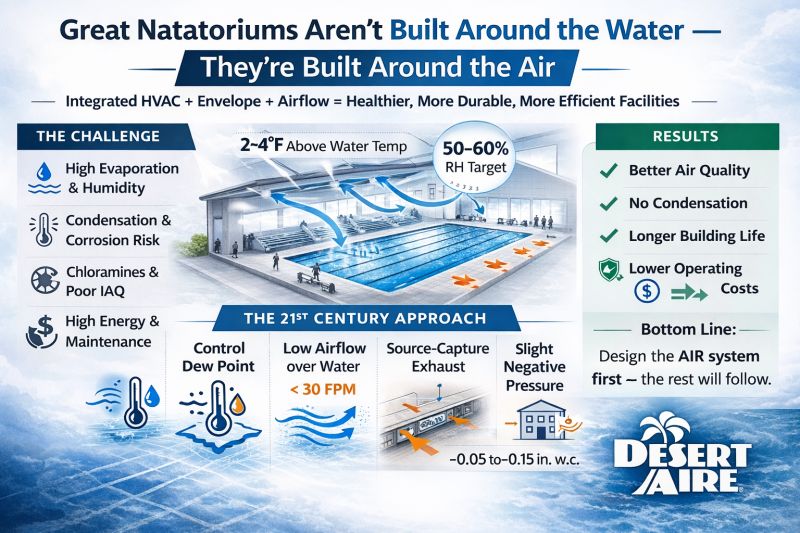
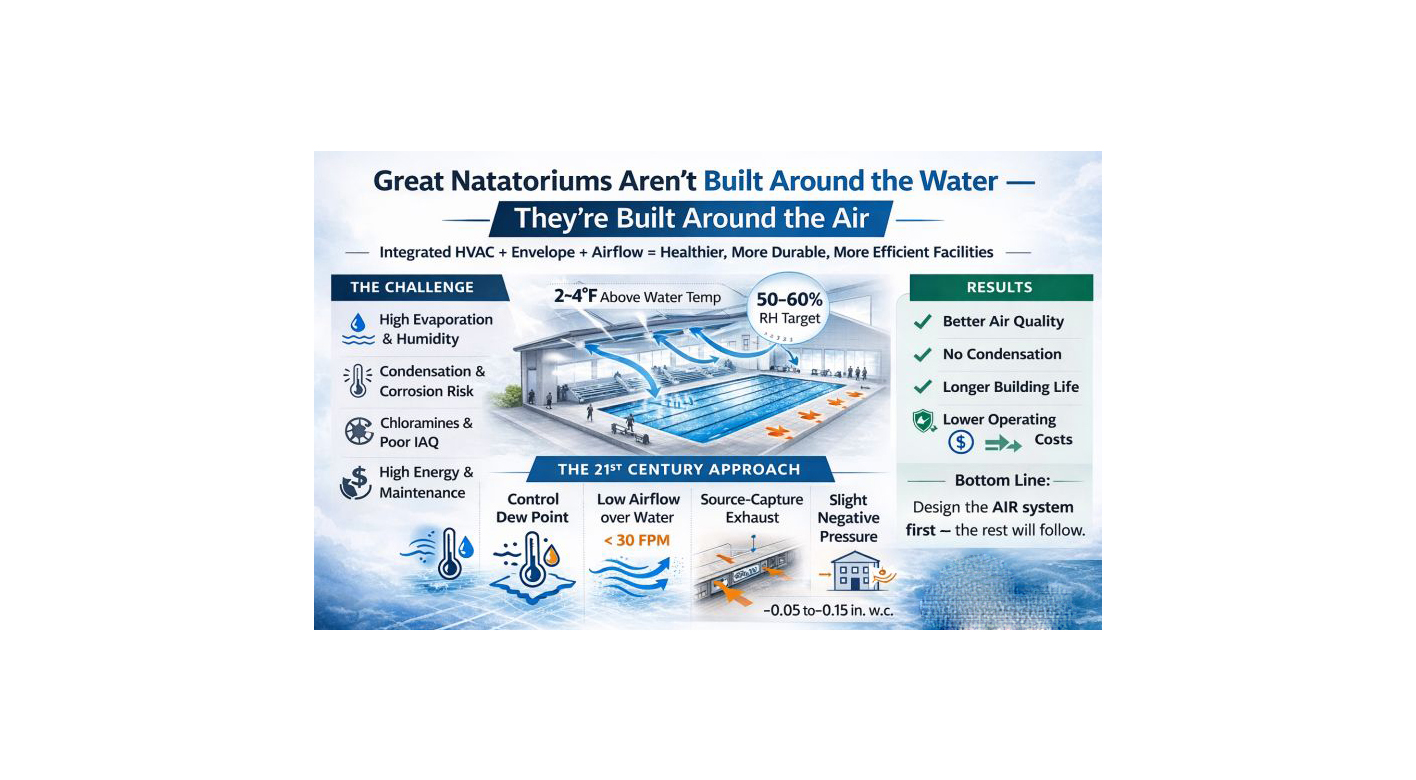
What should I know to build a great natatorium? It’s built around the air, but there’s more to it. To fully answer that question we created a Guide to an Integrated HVAC System Design for the 21st Century Natatorium
Here’s a few standout takeaways from the guide:
1) Natatoriums are integrated systems—or they don’t work performance isn’t just “select a unit.” It’s the interaction of: HVAC + building envelope + pool water temps + ventilation strategy + operating habits. Design those in silos and you’ll almost always pay for it later.
2) Humidity targets matter (and so does stability) A common target is 50–60% RH—high enough to avoid swimmer discomfort and excessive evaporation, but low enough to protect the structure. The real win is tight, consistent control that keeps dew point in check and prevents surface condensation.
3) Air movement across the water can quietly break your load calculations
One of the easiest mistakes: blasting air over the pool. High air velocity increases evaporation dramatically, which can make a properly “calculated” system feel undersized in real life. Better approach: limit air speed over the water and focus airflow on washing exterior walls/windows to prevent condensation.
4) Standard HVAC logic often isn’t enough natatoriums are dominated by latent load, not just sensible cooling. Even “HVAC with reheat” can struggle to maintain humidity and dew point—especially at part-load, during shoulder seasons, or as occupancy swings. These are specialty-load buildings that need purpose-built strategies.
5) IAQ isn’t optional. Indoor aquatic environments can accumulate chloramine-related contaminants that impact occupant comfort and perception. Ventilation and airflow patterns should support health-focused outcomes, not just temperature.
6) Commissioning is the difference between “designed” and “delivered” Even strong designs can fail without: proper start-up, verification, and staff training.
Download the Guide to an Integrated HVAC System Design for the 21st Century Natatorium.
Share
Ask A Question
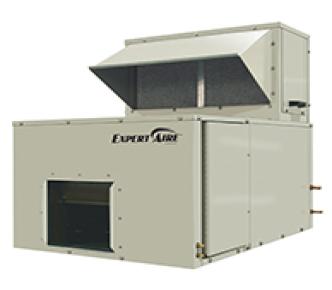
ExpertAire Horizontal (LC), Vertical (LV) & Packaged (LCP) Series Dehumidifier
Designed for high efficiency and long life, Desert Aire’s ExpertAire™ commercial dehumidification ...
View Details
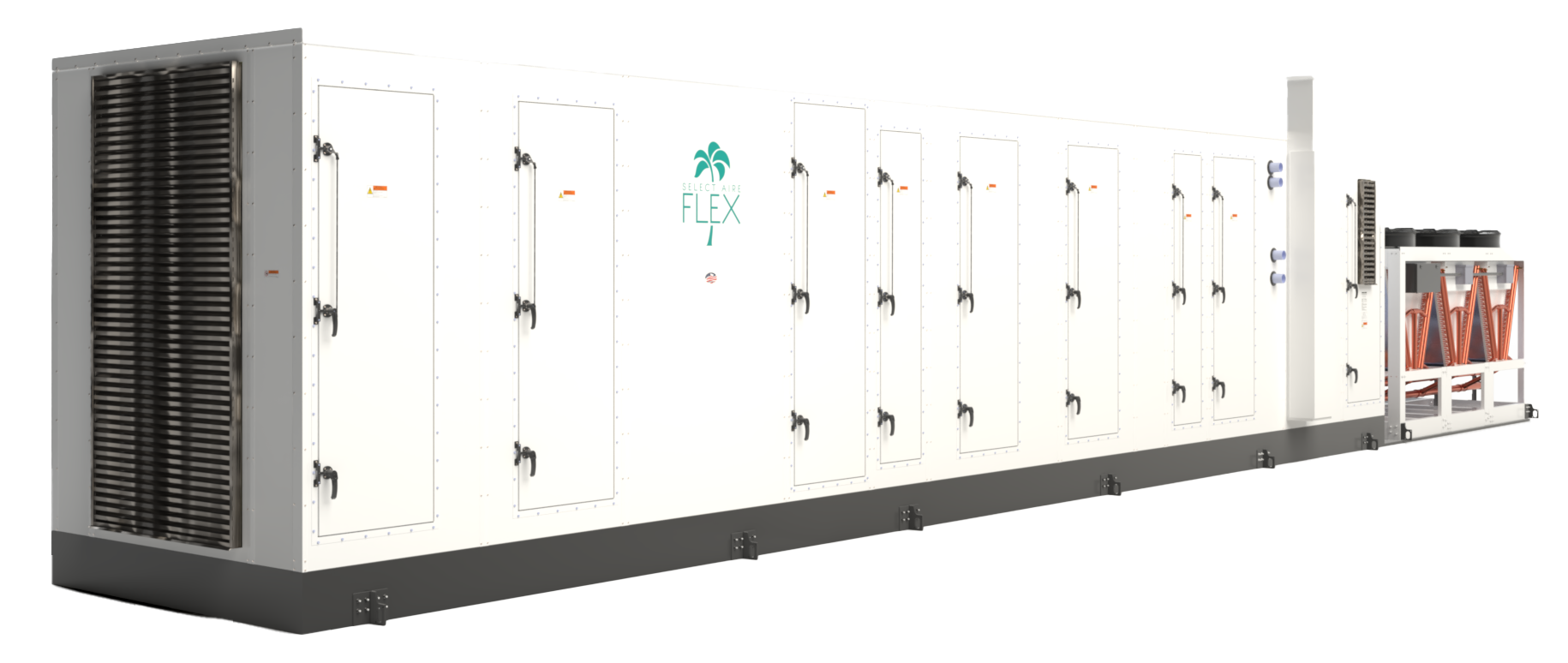
SelectAire FLEX (SF) Series Dehumidifier
SelectAire FLEX - built for flexibility where it counts, delivering more capability, more control, and...
View Details
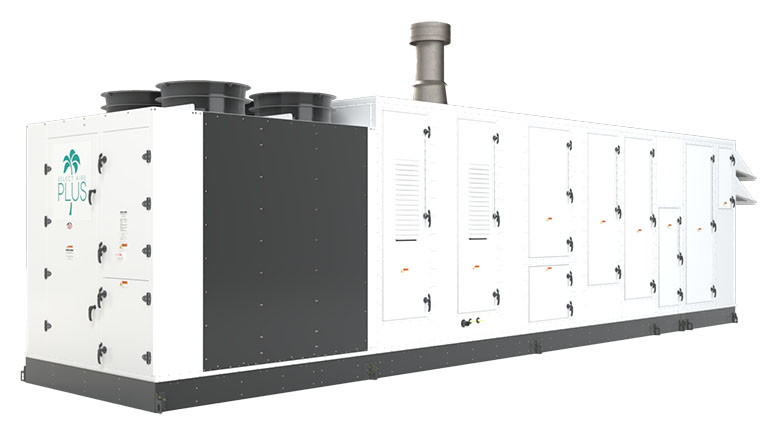
SelectAire Plus™ (SP) Series Dehumidifier
Designed specifically for large 50 meter pool applications, the SelectAire PLUS™ Series modular dehu...
View Details
SelectAire™ Series Dehumidifier
The SelectAire™ commercial dehumidification systems are ideal for large-scale moisture removal appli...
View Details
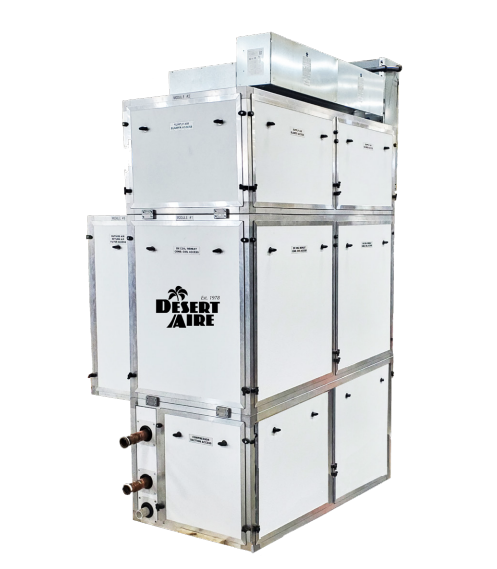
SwimAire™ Series Dehumidifier
With 39 to 112 lbs/hr of moisture removal capacity, 3,000 to 8,500cfm of air handling and 8 to 23 tons...
View Details
Find a Desert Aire Sales Rep Near You!
Our network of independent representatives are fully trained on Desert Aire’s dehumidification and DOAS solutions and can assist you in designing and sizing your engineered solutions.